How to Price Digital Products: Stop Undercharging, Start Getting Paid
Most creators price based on feelings, not strategy. Here's the psychology behind why people pay more for structure, and why $0 is the worst price you can set.
You spent weeks building it. You know it’s good. Then you stare at the price field and type $9 because charging more feels greedy.
Congratulations. You just left thousands on the table.
Pricing digital products is one of the most emotional decisions creators make. And emotion is a terrible pricing strategy. We’re going to fix that.
Why $0 Is the Worst Price You Can Set
Free has a cost. It signals “this isn’t worth paying for.” It attracts the wrong people: tire-kickers, hoarders, people who’ll never use it. It trains your audience that your work has no value. And it burns you out giving away what took you months to build.
Free samples can work. Free lead magnets can work. But giving away your main product “to build trust” or “to get exposure” is usually a trap. You’re not building trust. You’re training people that you don’t value your own work. Why should they?
The psychology is simple: people assign value based on price. A $0 product is worth $0 in their minds, no matter how good it is. A $47 product has weight. A $197 product has seriousness. Price communicates value before anyone reads a word.
The Psychology of What People Pay For
People don’t buy features. They buy outcomes. “Save 20 hours” beats “includes 15 templates.” “Launch in 30 days” beats “comprehensive guide.” The price needs to feel small compared to the result.
Anchoring matters. If the first number someone sees is $9, everything else feels expensive. If the first number is $197, a $47 tier feels like a steal. You’re not manipulating; you’re framing. Context shapes perception.
Structure matters more than content. A messy PDF feels worth $9. The same information in a clear framework, with checklists and a logical flow, feels worth $97. Packaging isn’t superficial. It’s how people evaluate what they’re getting.
Why Most Creators Undercharge
Imposter syndrome. “Who am I to charge that?” You’re the person who solved the problem. That’s who.
Comparison. “Other people charge less.” Maybe they’re leaving money on the table too. Or maybe their product is different. Your price should reflect your product, not someone else’s.
Fear. “What if nobody buys?” What if they do, and you’re stuck delivering premium value at discount prices forever? Undercharging locks you into a race to the bottom. You can always lower a price. Raising it is harder once you’ve trained people to expect cheap.
The Power of Three Tiers
One price is a yes/no decision. Three prices give people a frame. There’s the “basic” option, the “sweet spot” in the middle, and the “premium” option. Most people pick the middle. It feels safe: not the cheapest, not the most expensive. Strategic.
The tiers aren’t arbitrary. Each one serves a purpose. The low tier makes the middle look reasonable. The high tier makes the middle look like a deal. The structure does the selling.
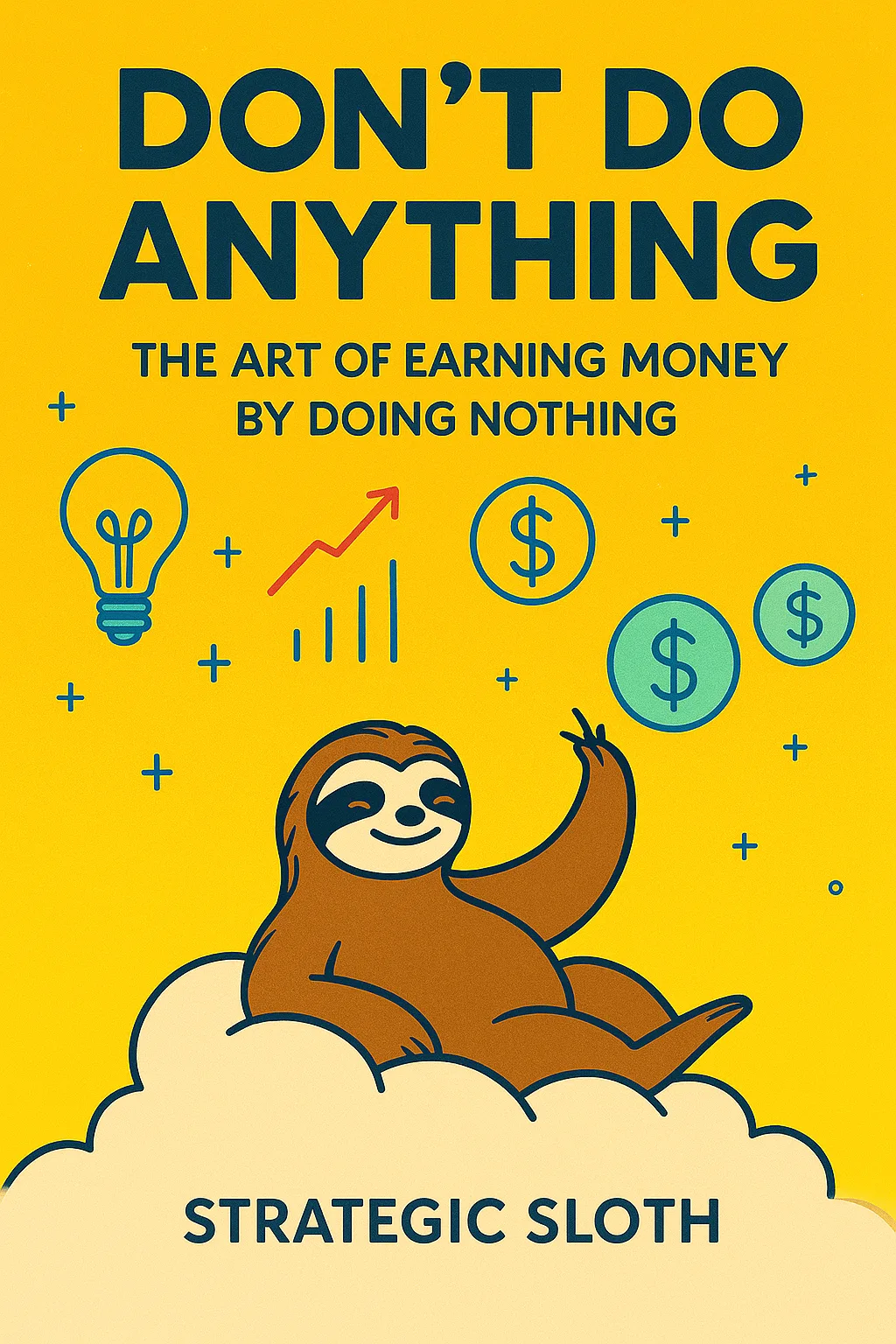
How to set those numbers, what to put in each tier, and how to present them so people choose the right one, that’s a system. The complete pricing framework, anchoring strategies, and real sales page templates are inside Don’t Do Anything. But the principle holds: structure beats a single number every time.
Perceived Value vs. Cost
Your cost to create the product is irrelevant to the buyer. They don’t care that it’s a PDF. They care what it does for them. If your guide saves someone 40 hours of research, is $97 a lot? Or is it $2.43 per hour saved?
Price based on the value delivered, not the effort it took you. That’s not greedy. That’s accurate.
The Conversion Piece
Getting the price right is half the battle. The other half is getting people to the point where they’re ready to pay. The sequence matters. The copy matters. The offer structure matters. There are formulas that work: specific ways to present price, handle objections, and close the gap between “interested” and “bought.”
Those live in the playbook. But the foundation is this: stop pricing from fear. Start pricing from value. Your work is worth more than you think. The numbers will prove it.
Related: Not sure what to sell yet? Start with How to Make Money Selling Digital Products (Without an Audience). Already selling and want to stop grinding? Read The Anti-Hustle Manifesto.
Want the full playbook?
This article scratches the surface. The Starter Package gives you the complete system for building digital income that runs on autopilot, plus a life design blueprint to actually enjoy the freedom.
Get the Starter Package - $17